


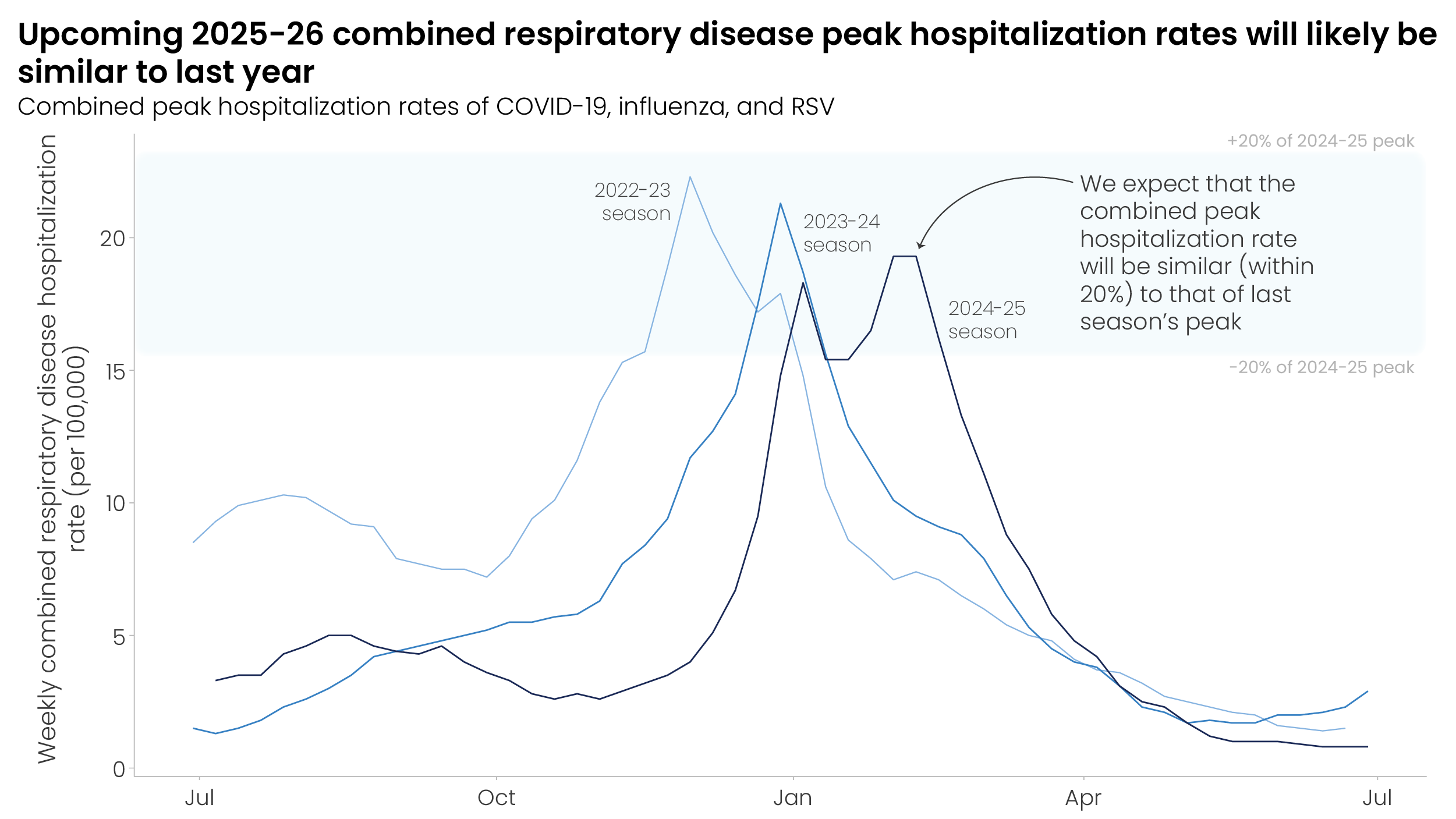
As we head into the time of year when respiratory viruses tend to spread, experts predict this season will likely be similar to last year in terms of severe cases leading to hospitalizations.
The Centers for Disease Control and Prevention anticipates a typical season for respiratory viruses like flu, RSV and COVID-19, with low case numbers expected in early fall. However, peak hospitalizations from these illnesses are projected to be similar to last season’s combined totals.

It’s important to take precautions such as frequently washing hands, getting appropriate vaccines and covering coughs or sneezes to protect yourself from illness.
Fall and winter – from October through April – are the seasons when we see surges in these respiratory viruses, particularly with schools in session and people spending more time in closer quarters, generally with less time outdoors in fresh air.
“The symptoms are typically the same for any of these respiratory viruses,” says Allison Ferdon, a nurse practitioner at Tidelands Health Pediatrics and Adult Medicine in Pawleys Island. “For patients over 65 years old or under 2 years old, as well as patients with underlying health conditions, the symptoms can be more severe.”
- Runny or stuffy nose
- Loss of taste or smell
- Sore throat
- Fever, chills or body aches
- Fatigue
- Headache
- Vomiting or diarrhea
“It’s tough to tell which virus you have unless you take a test,” Ferdon says. “There are home tests now for all three viruses, and the good news is that we do have effective treatments for two of them. That’s the benefit of knowing which virus you have.”
Health care providers can prescribe a five-day course of Tamiflu for patients with the flu. It is an antiviral medicine that can lessen the symptoms and shorten the duration of the illness, and is appropriate for most patients. Tamiflu should be started within 48 hours of developing flu symptoms.
The antiviral Paxlovid is a five-day treatment for COVID-19 intended to prevent hospitalizations for severe illness. It is typically prescribed for adults over 65 years old, though it is available for younger adults and children with underlying health conditions that could put them at higher risk for severe COVID-19. Paxlovid must be started within five days of symptom onset.
Currently, there are no antiviral medications for RSV. Doctors recommend over-the-counter medicines to address symptoms, as well as getting rest and drinking plenty of fluids.
Ferdon notes that while the symptoms listed above always warrant a call to your primary care physician for guidance, more severe symptoms need emergency treatment.
Symptoms signaling the need for emergency treatment for adults:
- Worsening fever or fever unresponsive to fever-reducing medicine
- Shortness of breath or difficulty breathing
- Chest pain
- Dizziness
- Confusion
Symptoms signaling an emergency for children:
- Difficulty breathing or fast breathing
- Ribs pulling in when breathing
- Signs of dehydration – no urine output in eight hours, no tears when crying
- Fever over 104 degrees, unresponsive to fever-reducing medicine
- Blueish tint to lips or face