


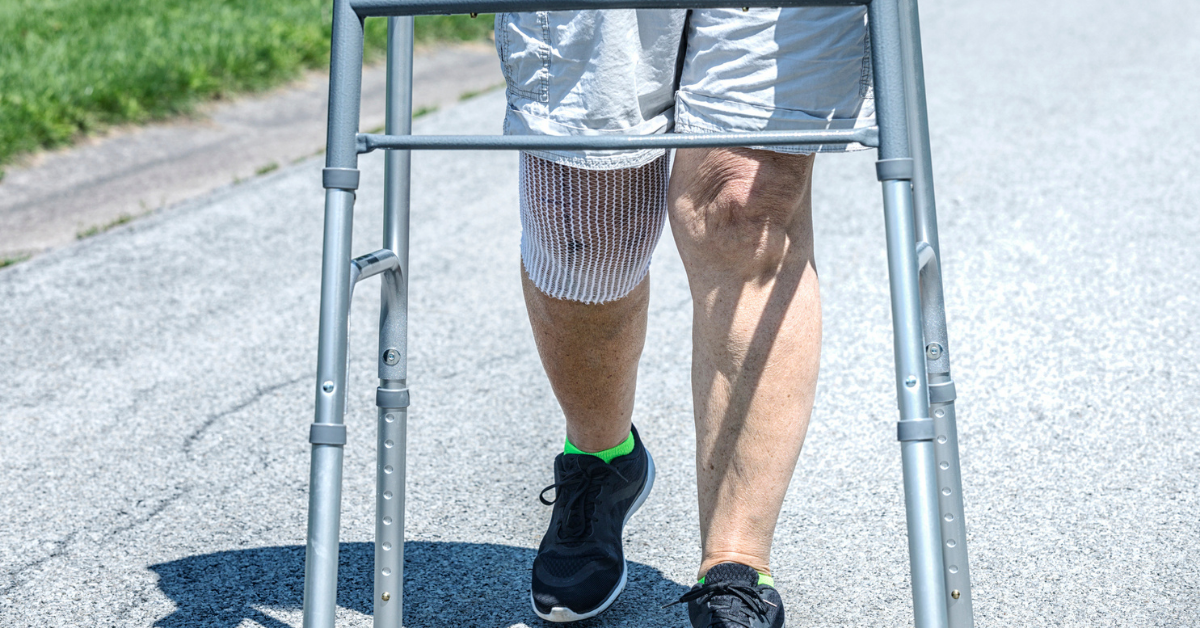
Facing the possibility of knee replacement surgery can feel overwhelming. Many people worry about pain, recovery time, what life will look like afterward and whether the surgery is truly worth it.
The encouraging news? Knee replacement is one of the most successful and commonly performed orthopedic procedures today. And with modern surgical technology, most patients are on their feet and walking the very same day.
Knee replacement surgery is typically the last step in treating advanced arthritis.
“I try to meet patients where they’re at,” says Dr. Justin Head, a knee and hip orthopedic surgeon at Tidelands Health. “As a provider, I like to exhaust all conservative options before resorting to surgery, and even then, sometimes patients aren’t ready for that next step.”
Common non-surgical options include:
- Topical or oral medications
- Heat and cold therapy
- Low‑impact exercises such as cycling or swimming
- Corticosteroid injections
- Viscosupplementation (gel injections)
“There’s a lot we can do before we even talk about surgery,” Dr. Head says. “Motion is actually really good for knees. A low‑impact activity that you tolerate well can make a big difference in pain and stiffness.”
Knee replacement becomes an option when pain and stiffness start interfering with your daily life, such as walking, climbing stairs, standing for long periods or enjoying activities you used to love and other treatments no longer provide relief.
“If you can’t do the things you need to do or want to do because of knee pain,” Dr. Head says, “that’s the time to consider surgery.”
Once arthritis becomes severe, for example, when the joint is “bone‑on‑bone,” it will not improve on its own, and it will be difficult for a patient to find relief.
“If a tire is flat and you keep going, you’re going to wear out the rim,” Dr. Head says. “That’s what stage‑four arthritis is. At that point, injections, PRP or stem cells won’t work.”
At this advanced stage, knee replacement becomes the most reliable way to restore mobility and relieve pain.
Today’s knee replacements are more precise thanks to robotic-assisted systems. The surgeon performs the procedure, but the robotic platform enhances accuracy and planning.
“Robotic‑assisted surgery versus traditional surgery is like going on a trip using directions you vaguely remember versus using GPS,” says Dr. Head. “We use a CT scan to build a 3D plan before surgery.”
Benefits of robotic-assisted surgery include:
- Improved range of motion
- Faster transition off a walker
- Lower pain medication needs
- More accurate implant positioning
- Longer implant lifespan
Many patients are surprised to learn they’ll be walking the same day as surgery. One of the biggest factors in recovery success is your level of mobility before the procedure.
“We know the patient’s level of functioning prior to surgery will reflect how they function after surgery,” Dr. Head says. “If you wait until you can barely walk to get knee replacement surgery, it will take much longer to get back to where you want to be.”
Patients in the region don’t have to travel far for state‑of‑the‑art knee replacement. Robotic-assisted joint replacement is available close to home at Tidelands Health.
“If a patient can have surgery and then sleep in their own home that night, that matters,” Dr. Head says. “I live in this community. My patients see me in the grocery store. Being able to offer advanced, life‑changing care close to home is something I’m truly proud of.”