





It started as a subtle eye twitch. But for Richard Green Jr., it quickly became something far more disruptive.
“I’d wake up in the morning and my mouth was drawn, my eye twitching,” Green said. “I had deep creases on one side of my face because my mouth would pull up involuntarily. It was miserable.”
Green experienced these left-sided hemifacial spasms for more than a decade. The condition caused his left eye to close and his cheek and jaw to draw back toward his ear, often at the worst possible moments.
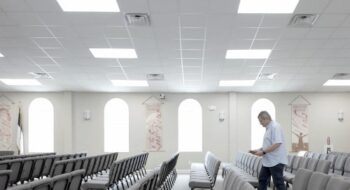
“Whenever I tried to concentrate, whether it was hitting a golf ball, playing music or leading worship at church, it would happen,” he said. “And it would happen more.”
Hemifacial spasm is a rare neurological disorder, affecting roughly 10 in every 100,000 people, according to the National Institutes of Health. Dr. Oluwaseun Omofoye, Green’s neurosurgeon at Tidelands Health Neurosciences, said the condition occurs when a blood vessel compresses the facial nerve near the brainstem, causing it to send abnormal signals that trigger involuntary muscle contractions.
Muscle relaxants can provide some relief, but there isn’t a medication that treats hemifacial spasms. The main option is to get Botox injections, which paralyze the muscles that are spasming.
Green endured those injections every three months, a cycle he described as a roller coaster.
“You’re getting shots all over your face and around your eye,” he said. “It’s not pleasant. And when the Botox wears off, the spasms come back.”
After meeting Dr. Omofoye, Green decided to pursue a surgery treatment that could bring permanent relief.
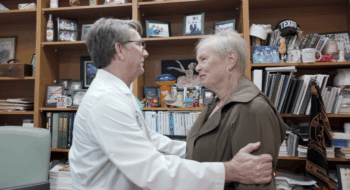
“As soon as I met Dr. Omofoye, I knew I could trust his judgment. I knew that this surgery could give me my quality of life back,” Green said. “He has care, he has concern. There was an air of professionalism and confidence.”
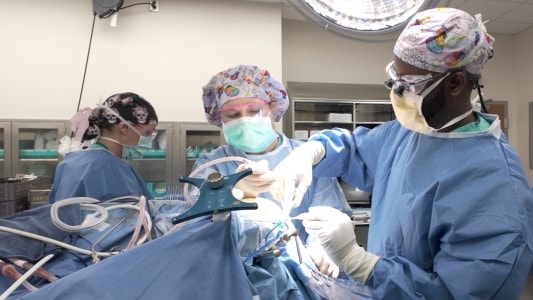
Green had a surgery treatment called microvascular decompression in January 2025. This procedure involved physically separating the facial nerve and the vessel compressing it by putting a piece of Teflon felt between the two.
“This is one of my favorite procedures in neurosurgery,” Dr. Omofoye said. “It’s why I went into this field – to give patients instantaneous relief.”
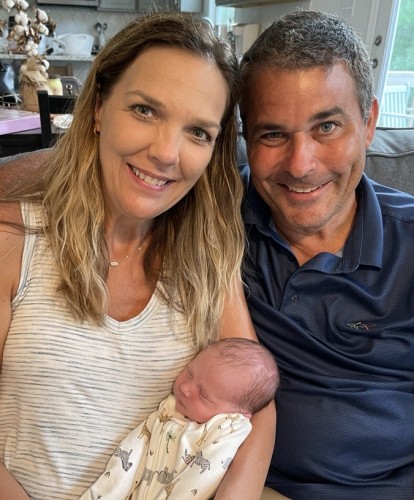
For the first time since the twitching started in 2012, Green no longer experiences any spasms or disruptions to his daily activities.
“It has been life-changing for me,” Green said. “God is the ultimate healer, and He uses people like Dr. Omofoye who are willing and gifted. I can’t thank him enough.”
Related ArticlesRelated Articles
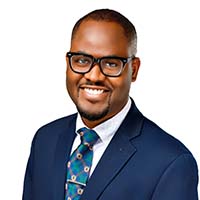
Dr. Oluwaseun Omofoye
Neurosurgeon, Tidelands Health
Call to Schedule
Bio
Dr. Oluwaseun Omofoye is a fellowship-trained neurosurgeon at Tidelands Health Neurosciences in Murrells Inlet.
Learn MoreMedical Education
Education
University of North Carolina, School of Medicine
Residency
University of California Davis Medical Center, Neurosurgery
Fellowship
Cedars-Sinai Medical Center, Neurosurgical Oncology/Skull Base
Awards
- James E. Boggan Resident Scholar Award, UC Davis Department of Neurosurgery, 2020
- Kaiser Foundation Hospital Sacramento Department of Neurosurgery Resident Award, 2020
- Resident Scholarship Award, San Francisco Neurological Society, 2020
- Elizabeth Bullitt Resident of the Year Award, UNC Department of Neurosurgery, 2017
- First Place, 2015 UNC Healthcare Quality Expo
- The UNC Medical Alumni Loyalty Fund Scholarship, 2011
- First Place, Biological and Health Sciences Oral Presentation, UNC Research Day 2011
- The June C. Allcott Fellowship, 2011
- Eugene Mayer Community Service Honor Society Inductee, 2011
- The John B. Graham Student Research Society Inductee , 2011
Meet the Expert
Dr. Oluwaseun Omofoye
Call to Schedule
Dr. Oluwaseun Omofoye is a fellowship-trained neurosurgeon at Tidelands Health Neurosciences in Murrells Inlet.