



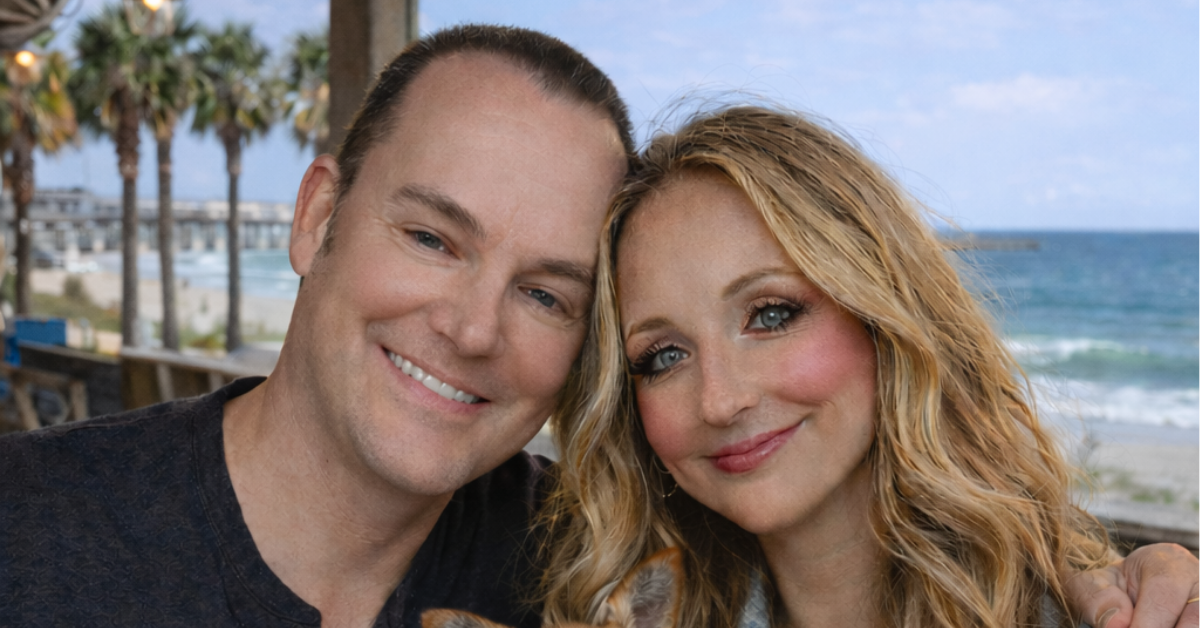

For years, Erika Schaefer believed this was her new normal.
About a week after sustaining a spinal cord injury in 2018, she woke in the middle of the night, soaked after her bladder emptied without warning.
“I was humiliated,” Schaefer says. “And from there, it just kept happening.”
For the next six years, she searched for help in the Seattle area, where she lived at the time. During that period, she struggled with two distressing and opposite bladder problems: nighttime urinary incontinence and daytime urinary retention.
“I felt trapped,” she says.
But her determination to get her quality of life back led her to a solution – one that has proven successful for many women facing incontinence issues.
“This is exactly why I went into this field,” says Dr. Annaceci Peacher, a urogynecologist at Tidelands Health. “These are issues women don’t talk about, but so many women experience them. To see someone like Erika, who’s so young, get her independence back is incredible.”
The condition
Schaefer’s injury to her cervical spine caused damage and swelling in her spinal cord, disrupting normal communication between her brain and bladder.
“When the spinal cord is affected above where the bladder nerves come off, patients almost always have significant urgency, frequency and incontinence,” Dr. Peacher says. “In patients like Erika, medication usually isn’t enough to make a significant difference in their daily life.”
The spinal cord acts as a messenger that carries signals telling the bladder when to store urine, when it is full and when it is time to empty. When those signals are interrupted, the bladder can lose its ability to function properly.
Despite her symptoms, Schaefer says numerous physicians in the Seattle area told her the condition was normal, an unfortunate but expected result of her spinal cord injury. She was prescribed medications and advised to wear adult diapers.
“Nothing actually helped,” Schaefer says.
Living between two extremes
Because medications that helped one condition worsened the other, treatment options were limited.
“I had to use catheters every single day,” Schaefer says. “During the day, I would sit on the toilet for hours, not being able to pee. I had no choice.”
Even leaving the house took an emotional toll on the 49-year-old.
“I used to carry a whole other set of clothes with me just in case I had an accident,” she says. “I carried catheters everywhere. I was throwing them away in people’s trash. It was exhausting.”
A new beginning
In 2024, Schaefer and her husband Jeff, along with their dog Bambi, moved to South Carolina. Soon after, she scheduled an appointment with Tidelands Health urologist Dr. Geoffrey Habermacher, who referred her to Dr. Peacher.
“On my very first visit, Dr. Peacher told me about an implant I could try,” Schaefer says.
The implant, called InterStim, is a bladder control therapy that uses gentle electrical stimulation to improve communication between the brain and bladder. By stimulating the sacral nerves, which play a key role in bladder function, the device helps regulate when the bladder stores urine and when it empties. The technology is similar to a pacemaker, but for the bladder.
“For her, neuromodulation really was the only thing that was going to benefit her,” Dr. Peacher says.
The technology can also help patients who develop urge incontinence, or involuntary urine leakage, after menopause, Dr. Peacher says. Hypertension, diabetes, smoking, back surgery or any neurologic condition can also predispose someone to bladder dysfunction.
“Medications can help some people, but they’re not perfect. They have side effects, and they only work when you take them,” Dr. Peacher says. “InterStim becomes a great next step for patients who don’t improve on medication.”
From that first appointment with Dr. Peacher, Schaefer knew she had finally found a physician willing to help her regain her quality of life.
“When I met Dr. Peacher, she already knew my case,” she says. “She walked in prepared and listened to my concerns. I left that appointment in tears because someone finally heard me.”
Flip of a switch
In November 2025, Schaefer began the Interstim trial period.
“The trial period lets us test the technology before committing to the permanent device,” says Dr. Peacher. “We expect at least a 50 percent improvement. We use bladder diaries before and during the trial so we can see the difference objectively.”
After the outpatient procedure, Schaefer saw instant improvements.
“As soon as I turned it on at home, I knew something was different,” Schaefer says. “I could pee when I wanted to pee, and I didn’t have an accident that night.”
Throughout the two-week trial, she had zero nighttime incontinence or daytime urinary retention, something she had not experienced in nearly six years.
And for the first time since her injury, she felt hopeful.
Quality of life restored
Schaefer returned for the permanent InterStim procedure soon after the trial period, and recovery from the outpatient procedure was easier than Schaefer expected.
Within days, she was back to her normal routine, only this time, without the constant worry and preparation that had defined her life for so many years.
“I can make plans now. I don’t have to pack extra clothes or know where every bathroom is,” Schaefer says. “I feel normal again.”





Dr. Annaceci Peacher
Urogynecologist at Tidelands Health OB/GYN
Bio
Dr. Annaceci Peacher is a fellowship-trained urogynecologist who provides care at Tidelands Health OB/GYN. She is accepting new patients.
Learn MoreMedical Education
Education
- University of Texas Health Science Center at San Antonio
Residency
- University of Texas at Austin
Fellowship
- Mount Sinai Icahn School of Medicine
Awards
Board Certification
American College of Obstetricians and Gynecologists
Meet the Expert
Dr. Annaceci Peacher
Dr. Annaceci Peacher is a fellowship-trained urogynecologist who provides care at Tidelands Health OB/GYN. She is accepting new patients.