



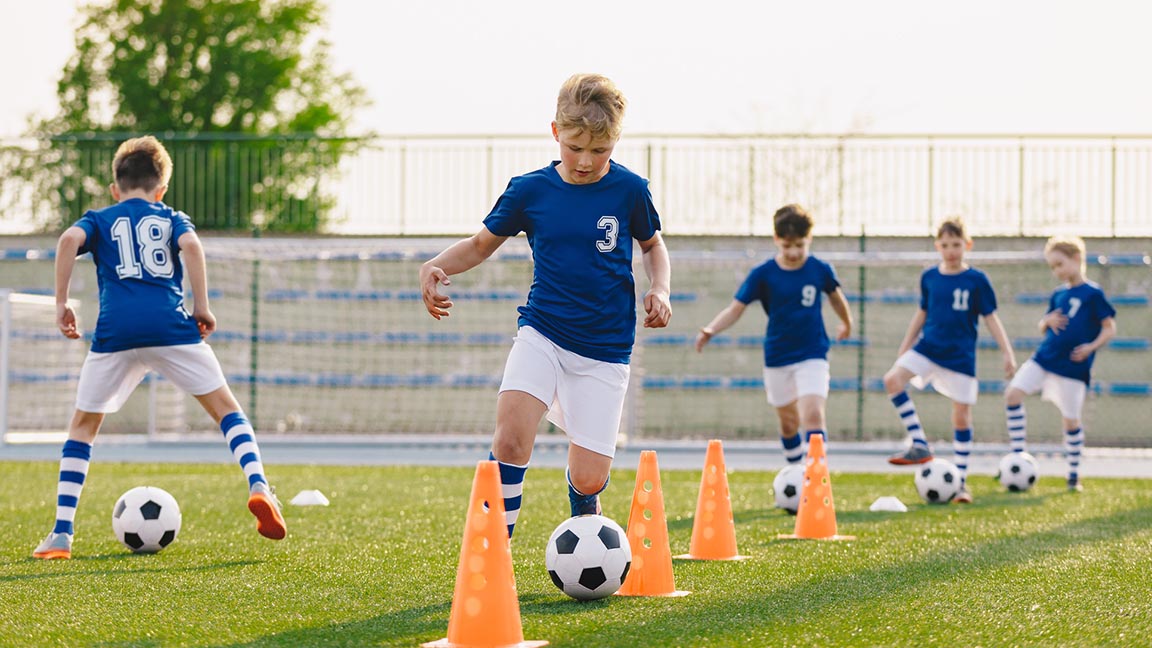

Spring is here, bringing with it more sunshine and the start of another season of sports for kids.
But the longer days can also lead to longer play for young athletes — and in turn, a greater potential for injury.
Children who play sports are prone to overuse injuries or growth plate injuries. But there are ways to reduce those risks and keep everyone happy and healthy, says Dr. Christopher Johnson, a Tidelands Health physician who specializes in both family medicine and sports medicine.
The risks
There are two common types of injuries that young athletes deal with.
The first is a growth plate injury, which can commonly occur in the wrist, shoulder, knee and ankle.
“It’s like a stretching type injury where the bone itself is stretched,” Dr. Johnson says, “so the growth plate basically comes away from the rest of the bone.”
Symptoms: Like a sprain, the area can be painful or tender, swell or have limited movement.
Causes: High-intensity sports training and large growth spurts are commonly to blame.
Treatment: See a doctor right away to determine if there is a bone fracture and to prevent improper growth or other long-term impacts.
Overuse injuries have similar symptoms, but occur when repetitive motion puts too much stress on muscles, bones and joints.
There are two main ways to reduce the risk of either injury.
Reduce duration
The first thing to do is to know when to take a break. Most kids need an hour of physical activity per day – meaning they’re moving their bodies enough to be a little sweaty or out of breath.
For young athletes, the exercise they’re getting is likely more rigorous.
“There is such a thing as too much,” Dr. Johnson says.
Generally, young athletes shouldn’t perform more than five days of high-intensity activity in their sport per week. And each year, they should take two to three months away from their sport to let their bodies rest and grow.
Add variation
Specializing in a single sport is one of the biggest things that will put a young athlete at risk for injury.
For example, in baseball, a pitcher is repeatedly putting stress on their shoulder, arm and back to throw the ball over and over again.
“They’re putting compound stress on the same joints, on the same tendons every single day that they compete or perform activity in this sport,” Dr. Johnson says.
He recommends that athletes also participate in other sports throughout the year. A baseball player may try football, or a basketball player may try swimming. The variation will help prevent injury.
Young athletes can also work with a physical therapist to develop a program to work on strength and flexibility throughout their entire bodies, not just in one or two types of motion.





Dr. Christopher Johnson
Family and sports medicine physician at Tidelands Health
Bio
Dr. Christopher Johnson provides comprehensive health services in primary care and sports medicine, including wellness checks, ongoing treatment for chronic conditions such as diabetes and non-surgical evaluation and treatment of musculoskeletal conditions.
Learn MoreMedical Education
Education
Meharry Medical College
Residency
University of Maryland Capital Region Medical Center
Fellowship
Medical College of Georgia, Sports Medicine

Meet the Expert
Dr. Christopher Johnson
Dr. Christopher Johnson provides comprehensive health services in primary care and sports medicine, including wellness checks, ongoing treatment for chronic conditions such as diabetes and non-surgical evaluation and treatment of musculoskeletal conditions.