





Some absentmindedness is a normal part of aging, and while it can be frustrating, those forgetful moments also can cause worry that there’s something serious going on.
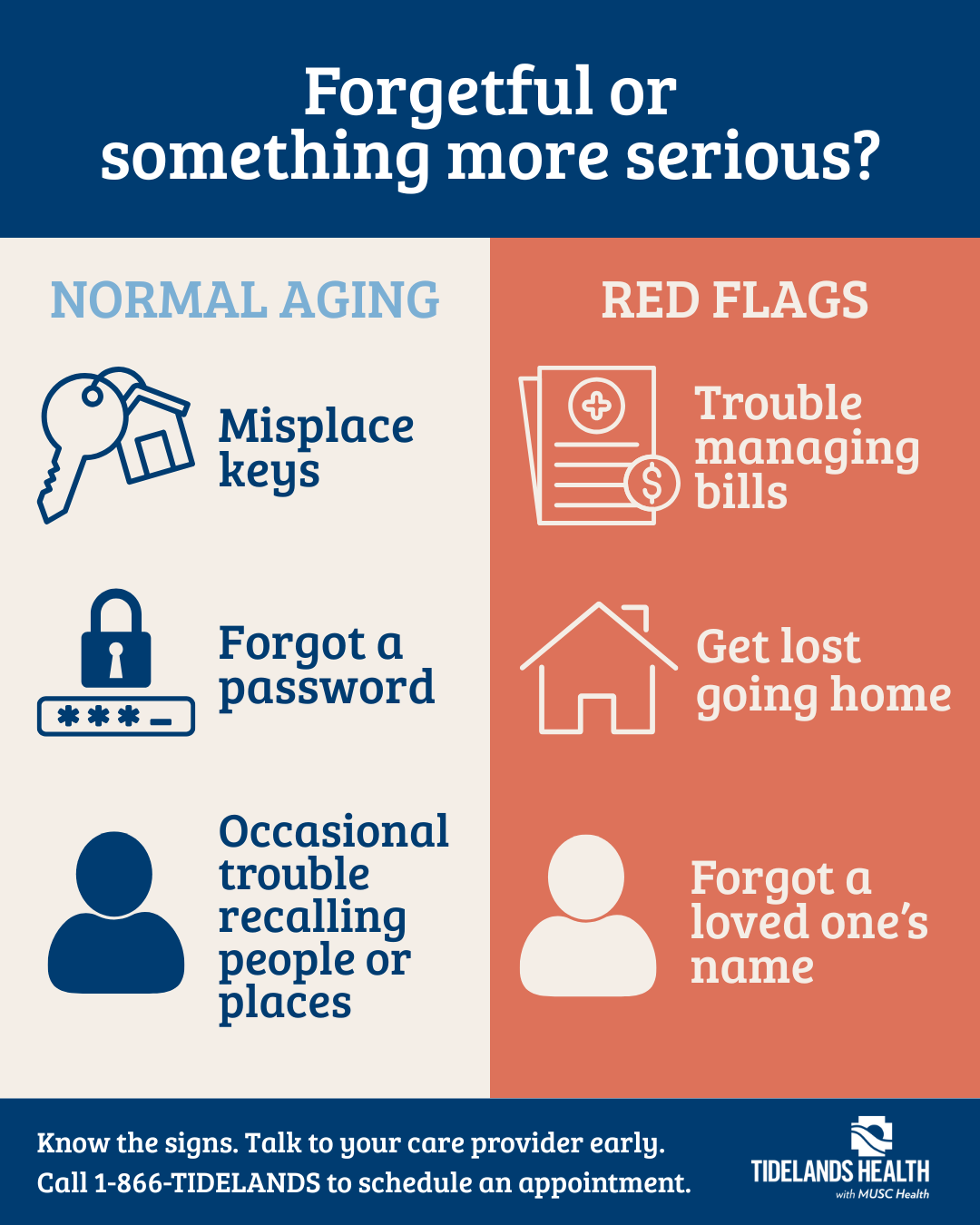
Symptoms like these are probably just signs of a typical aging brain:
- Losing track of your keys
- Forgetting a password
- Not recalling the name of an acquaintance
However, the following signs may indicate a more serious issue:
- Forgetting what your keys are for
- Can’t find your way home
- Trouble managing your bills
- Forgetting the name of a loved one
“We have screening tests that we begin giving people after 60, even if they don’t have memory concerns,” says Dr. Michael Remines, an internal and family medicine physician at Tidelands Health Family Medicine at The Market Common. “The tests are a simple and quick way to assess mental status using a questionnaire. Then we have a baseline from which to monitor a person’s status over time.”
Dr. Remines says one common red flag is when a patient doesn’t realize there’s a problem.
“Often, we see family members come in with a loved one because they are concerned that memory issues are risking the patient’s safety at home,” Dr. Remines says. “In many cases, the patient is unaware of significant memory issues.”
Causes of memory disorders
The most common causes of significant memory deficits Dr. Remines sees are Alzheimer’s disease and chronic microvascular dementia, which is caused by multiple small strokes and often progresses over the years. These conditions are not curable. However, other causes of mental confusion and forgetfulness can be corrected, including:
- Interactions among multiple medications
- Sleep disorders, which can sometimes be exacerbated by sleep medications
When to see your doctor
“The bottom line is that it’s never too early to talk to your doctor about memory concerns,” says Dr. Remines. “Our risk of having a problem grows as we get older, and having a solid understanding of a patient’s mental status helps us to respond when needed. Some medications can slow the progress of early signs of cognitive decline, and while they aren’t a cure, the added years of independence they can offer can be a gift.”
Though cognitive disorders do run in families, medical advice for keeping the brain healthy is the same general advice as for the rest of the body, Dr. Remines says.
“You can’t change family history, but you can reduce your risk of cognitive decline by making healthy lifestyle choices, controlling chronic diseases like diabetes and high blood pressure and staying physically and socially active,” he says.





Dr. Michael Remines
Family and internal medicine physician at Tidelands Health Family Medicine at The Market Common
Bio
Tidelands Health family and internal medicine physician Dr. Michael Remines offers care at Tidelands Health Family Medicine at The Market Common.
Learn MoreMedical Education
Education
West Virginia School of Osteopathic Medicine
Residency
University of Tennessee Medical Clinic
Meet the Expert
Dr. Michael Remines
Tidelands Health family and internal medicine physician Dr. Michael Remines offers care at Tidelands Health Family Medicine at The Market Common.