



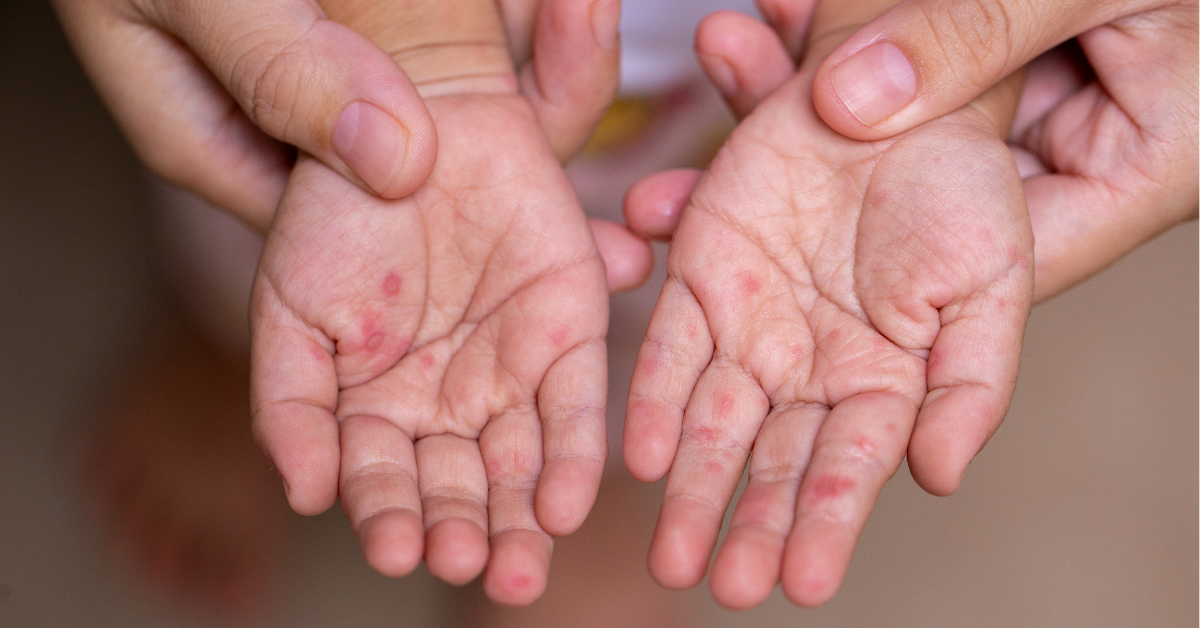

Uh oh — your kid has a fever. And is that a rash on his or her hands?
It could be hand, foot and mouth disease, a highly contagious viral infection that commonly affects kids under the age of 7.
“It’s a very, very common illness that we see frequently in the clinic setting,” says Dr. Robin Hudson, a pediatrician at Tidelands Health. “During certain seasons, I’ve seen multiple cases in a day.”
HFMD spreads mostly in the summer and fall in the United States, but you can get it any time of year. It can spread quickly in schools and day care centers.
Some ways people can contract HFMD:
- Contact with droplets from a cough or sneeze
- Touching an infected person, like kissing, hugging or sharing cups
- Touching an infected person’s feces, such as changing diapers and then touching your eyes, nose or mouth
- Touching objects and surfaces that have the virus on them, like doorknobs, shopping carts or toys, then touching your eyes, nose or mouth
And while it’s most common in kids, anyone can get it. Here’s how to identify and treat the illness.
Symptoms
It usually takes between three and five days after exposure for symptoms to appear. They may include:
- Fever
- Sore throat
- Blister-like lesions in the mouth
- Rash commonly occurs on the hands or feet
The rash isn’t itchy, but it could appear as small bumps or blisters.
And, in some cases, the virus causes fingernails to peel or fall off.
“I like to warn parents about fingernails peeling or falling off,” Dr. Hudson says. “It doesn’t always happen, but it can be kind of a scary thing. So I want to make sure they know it can be part of the resolution process.”
Treatment
HFMD is usually a minor illness, but there is no medication to clear it.
The most important thing to do is stay hydrated. It can be a challenge to get kids to drink enough if they have mouth sores. A good rule of thumb is to make sure they’re drinking enough to have urine output at least every eight hours.
Otherwise, medications like Tylenol or Motrin are your best bet to help reduce fever and alleviate discomfort.
“It’s kind of a frustrating illness for parents from that standpoint,” Dr. Hudson says. “It just has to run its course.”
Contact your doctor if your child is younger than 6 months, the fever lasts more than three days, your child is not able to drink fluids because of painful mouth sores or the symptoms last more than 10 days.






Dr. Robin Hudson
Pediatrician at Tidelands Health Pediatrics
Bio
Dr. Robin Hudson is a board-certified pediatrician and sees patients at Tidelands Health Pediatrics.
Learn MoreMedical Education
Education
University of Arkansas for Medical Sciences
Residency
University of Louisville, Kosair Children’s Hospital

Meet the Expert
Dr. Robin Hudson
Dr. Robin Hudson is a board-certified pediatrician and sees patients at Tidelands Health Pediatrics.