

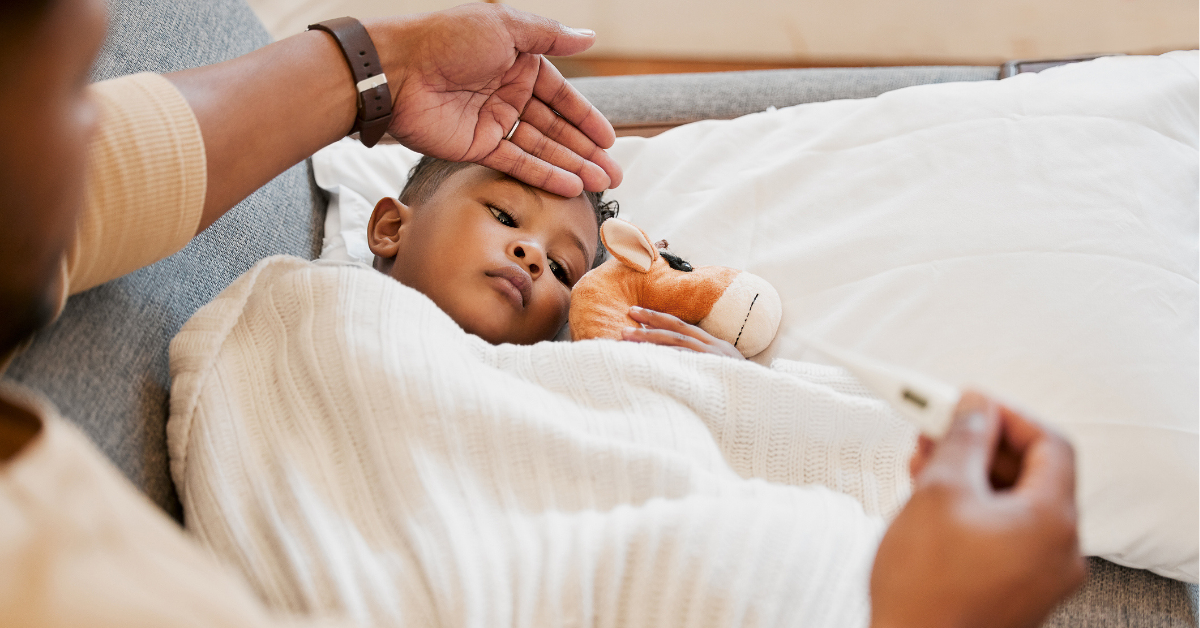

Common knowledge says that “normal” on the thermometer is 98.6 degrees Fahrenheit. However, for medical professionals, a fever is defined as a body temperature of 100.4 degrees Fahrenheit or higher.
“A temperature is not inherently dangerous,” says Brittany Gibson, a family nurse practitioner at Tidelands Health Pediatric and Adult Medicine in Pawleys Island. “As in adults, an elevated temperature is the body’s natural, physiological response to the presence of a germ.”
Recommended methods for measuring a child’s temperature
- Rectal: Most accurate and recommended, particularly for babies and young children
- Oral: Next best, under the tongue, and no food or drink for 15 minutes before measuring
- Scanning thermometers (ear and forehead): less reliable, prone to user error, but acceptable
Treating elevated temperatures below 100.4 at home
Children can feel uncomfortable even before their temperature hits 100.4 degrees. For babies over 3 months, toddlers and older children, Gibson advises treating temperatures under 100.4 degrees with comfort measures:
- Tepid or cool bath
- Acetaminophen or Tylenol (all ages)
- Ibuprofen or Advil (six months and older) – determine dosing by weight and label instructions
- Sleep
- Increased fluid intake
When to call for a child’s fever
Parents with infants under 3 months old should always contact their child’s care provider for advice for fevers over 100.4 degrees.
For babies over 3 months, toddlers and older children with temperatures over 100.4 degrees, Gibson says these symptoms warrant a call:
- Fevers lasting more than five days or returning fever
- Nonresponsive to fever-reducing medicines
- Lethargy
- Agitation or unexplained whining or crying
- Weakness
- Dry mouth
- Refusing fluids
- Decreased urine output
- Persistent vomiting
When is a fever an emergency?
Call 911 or seek emergency care if your child:
- Has a temperature over 104 degrees, not responding to fever-reducing medicines
- Loses consciousness
- Experiences a seizure
- Has an atypical rash
- Complaints of a stiff neck or a severe headache
“For children who have underlying health conditions, like diabetes, asthma, blood disorders, immune disorders – children who are medically fragile – my advice to parents is to have a conversation with their care provider about when their child should be seen for fever,” Gibson says.
Parents who choose to use over-the-counter cough and cold medications for their children should check with their pediatrician for recommendations, use pediatric formulations and check the labels for ingredients like acetaminophen, Gibson says.
“It’s important to pay careful attention not to exceed the total 24-hour dosing of medicines like acetaminophen,” Gibson says.
Related ArticlesRelated Articles
-

What aging well really means after 60
Aging Well -

Outpatient bladder procedure ends six years of symptoms for Myrtle Beach woman: ‘I feel normal again’
Family -

What is pulmonary embolism and how to recognize the signs
Health -
Tidelands Health, MUSC collaborate to train future cardiovascular specialists
Health


Brittany Gibson
Family nurse practitioner at Tidelands Health Pediatrics and Adult Medicine
Bio
Brittany Gibson is a family nurse practitioner at Tidelands Health Pediatrics and Adult Medicine in Pawleys Island. She is accepting new patients.
Learn MoreMedical Education
Education
Medical University of South Carolina, Doctor in Nursing Practice

Meet the Expert
Brittany Gibson
Brittany Gibson is a family nurse practitioner at Tidelands Health Pediatrics and Adult Medicine in Pawleys Island. She is accepting new patients.